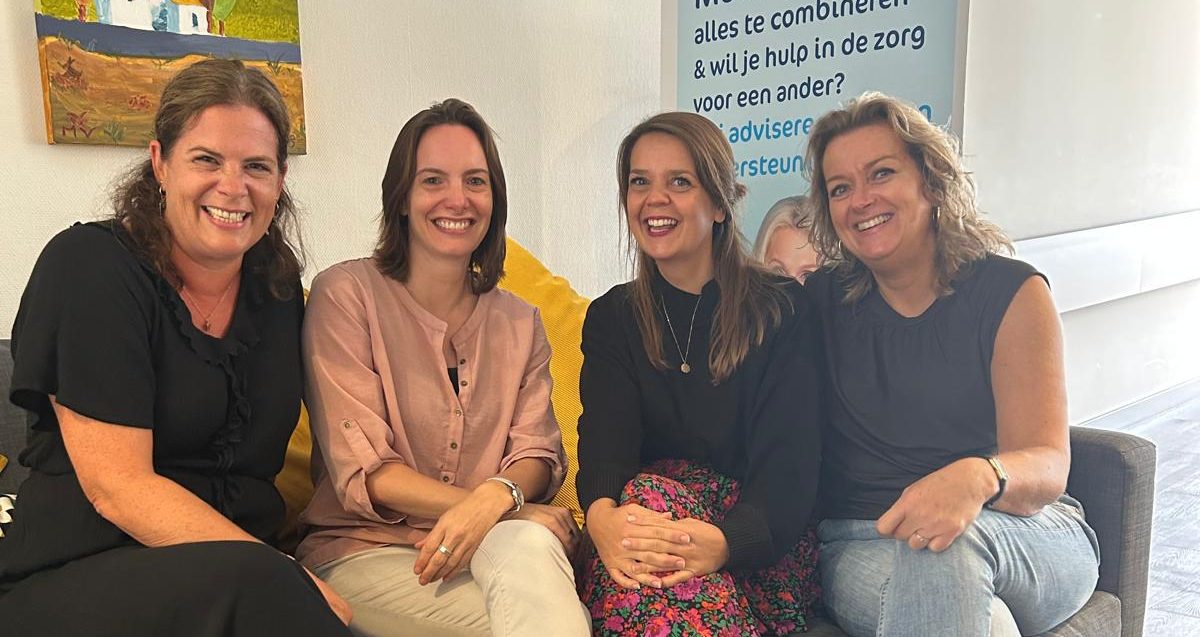
Meet Inge, Linda, Manon and Mariëtte: team informal care support Etten-Leur

Meet Inge, Linda, Manon and Mariëtte: team informal care support Etten-Leur

What do you do for family caregivers?
“We are there for family caregivers who have questions, get stuck or just want to tell their story. Sometimes one conversation is enough to get some air again. And if more is needed, we help think about what is possible: practical, emotional or through our offerings.”

What support do you provide?
“We organize activities for family caregivers: creative, but also informative and sports. Think of workshops, a cycling club, flower arranging, a meeting group for people with dementia or a lecture on living loss or guarding boundaries. There is also buddy help: then we link a volunteer who gives temporary support, for example by walking together or doing some shopping. This often relieves the caregiver. We also look not only at the caregiver, but also at the care recipient. For people with dementia, for example, we think about what can still be done? Which activities are still appropriate? How can we maintain as much control and quality of life as possible? We also have peer groups, including for caregivers of someone with dementia, and offerings for young caregivers.”

What does an initial contact with a family caregiver look like?
“People come to us through all kinds of routes: through the network, such as home care, case managers or the practice manager, but also through the website. We start with an introduction: who do you care for, what's going on and what do you need? Sometimes a listening ear is enough. Sometimes we link someone to an activity or we refer them. We always look: what is most urgent right now? That's customized work.”

What do you think is important in that contact?
“That someone leaves with a good feeling. That you've really been heard. Many family caregivers don't know exactly what to expect with us. We regularly hear: ‘I was already at the door a few times, but I didn't dare’. And when they do walk in, it often turns out that more is possible than they thought.”

Why do you work in this field?
“We all have different backgrounds, but share the same motivation: to support family caregivers without taking over. We want to help people gain an overview, maintain control and find their own strength again. Sometimes help is in something small, sometimes in really standing beside someone and moving with them in what is needed.”

What are you proud of?
“In moments when family caregivers go home relieved. Because they discover that there are options, or that someone is there beside them. It's nice when people later say, ‘You have no idea what this means to me.’ And sometimes caregivers even want to give something back and later join as volunteers. Those are really gems.”

What tip would you like to give caregivers?
“Don't wait until things get too tough. You don't have to know exactly what you need to contact. A first step may be small.”

What is a good first step when you are in danger of being overloaded?
“Sometimes it is first important to create practical air. Then together we look at what is needed now: for example, support through Wmo, respite care or help in the home situation. If space is created, we can then look further.”

How can family caregivers get in touch?
“You can walk in, but you don't have to. You can also e-mail, app or send a message via the website. You can also register as a caregiver: then you will receive newsletters with tips, information and activities. For many people, this is a great first step. And: the coffee is ready. It's free and without obligation.”

Skip to content